 blog
Best Fishing Gear for Beginner Anglers: 2026 Guide
Table of Contents
- Start With a Beginner Fishing Gear Checklist
- The Best Beginner Fishing Rods and Reels
- Basic Fishing Tackle for Beginners
- Line, Leaders, and the Right Strength
- A Beginner Fishing Rig Setup You Can Tie at Home
- Match Your Gear to Where and What You Fish
- Care, Storage, and Safe Handling
- Conclusion
- Frequently Asked Questions
Last Updated: October 19, 2026
Start With a Beginner Fishing Gear Checklist
The best fishing gear for beginner anglers is a short, honest list, not a catalog.
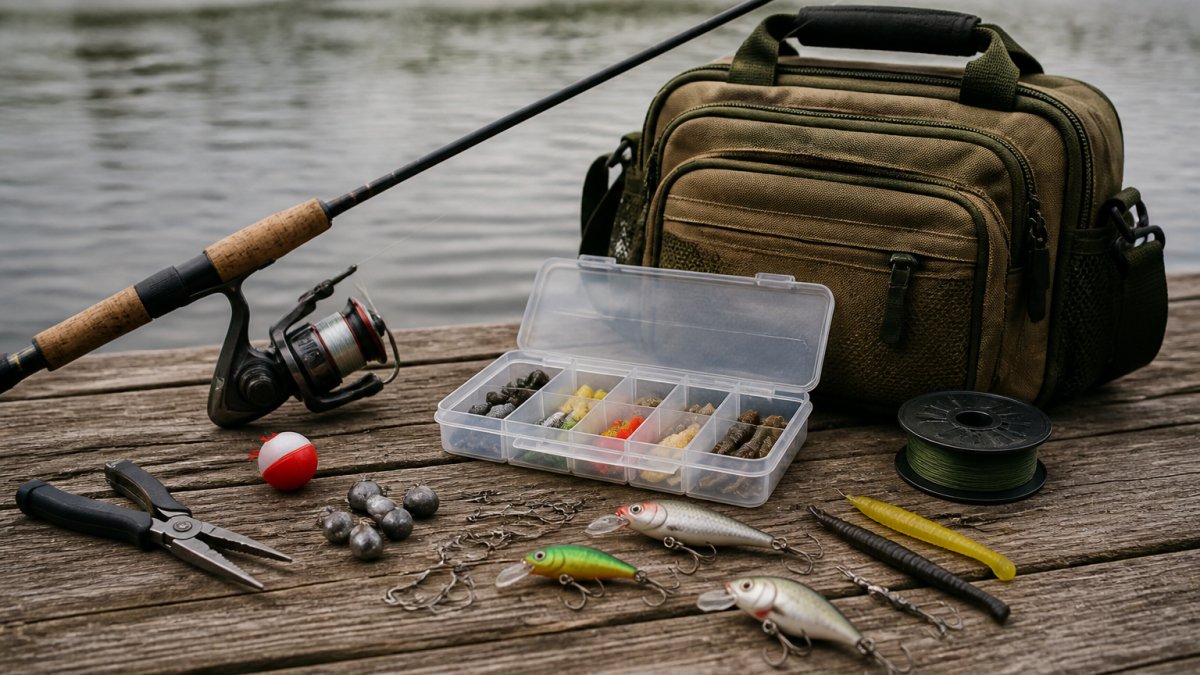
Here's what actually earns a spot in your kit:
- Rod and reel (a matched combo is simplest)
- Spare line spool in the right strength
- Hook assortment in two or three sizes
- Split shot and a few bullet or egg sinkers
- Bobbers
- Needle-nose pliers and line clippers
- Small tackle box or soft bag
- Bucket or landing net
- Sunscreen, hat, and water
- Valid fishing license
The Essentials You Actually Need
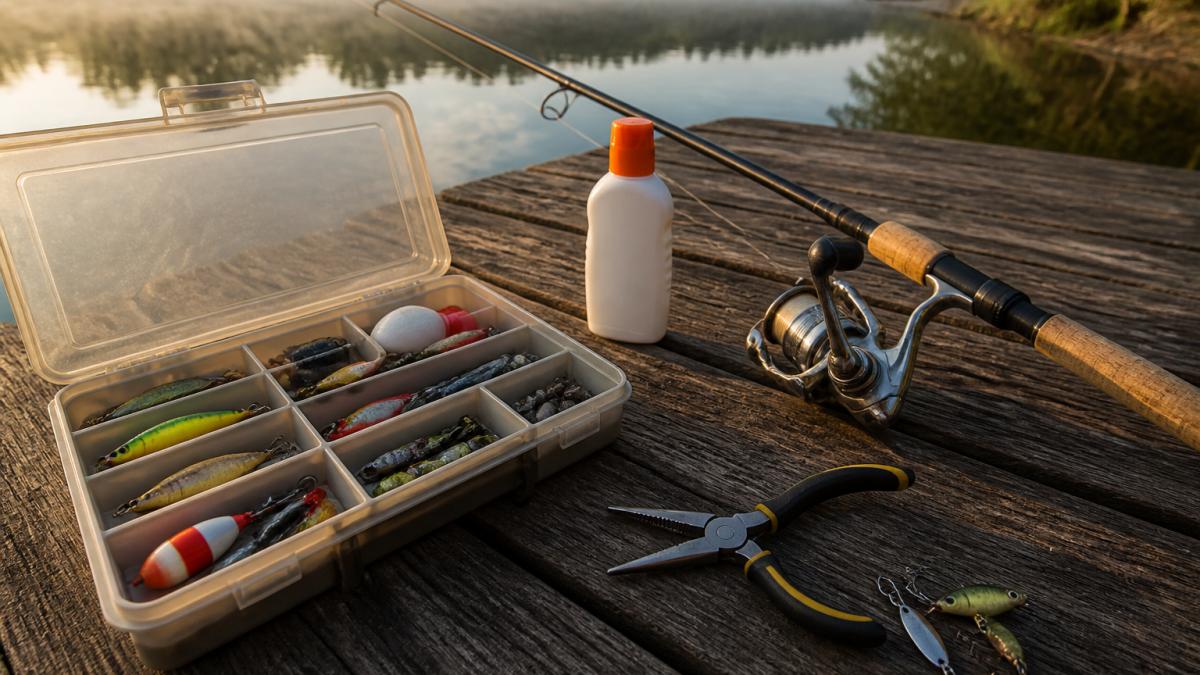
Five categories cover almost every beginner trip: rod and reel, line, hooks, weights, and bait. Add pliers and a license and you can fish legally and effectively on day one. Anything beyond that list is a convenience, not a requirement.
Three Starter Setups at Three Budgets
Most beginner guides list items but never add them up.
Minimal setup
- Spincast combo
- Monofilament line (already spooled on most combos)
- Hook assortment
- Split shot and bobbers
- Needle-nose pliers
- Small tackle box
- Fishing license: varies by state
This setup catches panfish and stocked trout in ponds and small lakes.
Mid-range setup
- Spinning combo
- Spare spool of 8-pound monofilament
- Hook and terminal tackle assortment
- Small soft-plastic lure pack and jigheads
- Needle-nose pliers with cutter
- Soft tackle bag
- Landing net
This is the sweet spot for most beginners. A spinning combo handles more situations than spincast, and the lure pack lets you learn to work artificial baits.
Upgrade setup
- Quality spinning combo with sealed drag
- Braid main line plus fluorocarbon leader
- Expanded terminal tackle
- Two or three proven lures
- Pliers, line clipper, and hook sharpener
- Tackle backpack
- Landing net and bucket
Upgrade money is best spent on the reel first. A sealed drag and smooth retrieve matter more than a stiffer rod for a beginner.
What You Can Borrow or Skip
Skip the electronics, the giant tackle box, and the specialty lures for now. Borrow a net, a bucket, and a second rod from a friend or family member before you buy.
Wait on waders, a kayak, and fly gear until you know which water you'll fish most. The U.S. Fish and Wildlife Service's beginner fishing resources explain access basics and licensing, which matters more than extra tackle early on.
What to Buy First, Second, and Later
- First trip: combo, line, hooks, weights, bobbers, pliers, license
- Second purchase: landing net, small lure pack, spare line spool
- Later: waders, kayak, fish finder, fly gear, extra rods
Following that order keeps your first-season spend under $150 in most cases and puts money toward the items that actually catch fish.
The Best Beginner Fishing Rods and Reels
A matched rod-and-reel combo in a medium power, fast-to-moderate action is the best beginner fishing setup for most freshwater and light inshore work. Buy the combo, not the pieces.
Combos remove the guesswork of matching a reel seat to a rod butt and a line rating to a blank. For a first rod, that convenience is worth more than any spec sheet.
Spincast vs. Spinning Reels
A spincast reel is a closed-face reel with a push-button release, and it is the easiest reel to learn on. A spinning reel is an open-bail reel that hangs under the rod and handles lighter line and bigger fish with more control.
Start with spincast if you're fishing with kids or want zero backlash frustration. Move to spinning once you're comfortable casting and want more range.
| Reel Type | Ease of Use | Best For | Trade-off |
|---|---|---|---|
| Spincast | Easiest | Kids, first trips, ponds | Less casting distance |
| Spinning | Moderate | Most freshwater and inshore | Requires line management |
Rod Length and Action
A 6-foot, 6-inch medium-action rod covers the widest range of beginner situations. Shorter rods cast accurately in tight cover; longer rods add distance in open water.
Action describes how much the rod bends. Fast action bends near the tip, which helps with hooksets. Moderate action bends deeper and is more forgiving for beginners.
Basic Fishing Tackle for Beginners
Basic fishing tackle for beginners comes down to hooks, sinkers, and a couple of bobbers. Buy an assortment, not a single size.
Hook size confuses almost everyone at first. Smaller numbers mean larger hooks: a size 1 hook is bigger than a size 8.
Hooks, Sinkers, and Terminal Tackle
Carry hook sizes 6, 4, and 1 for panfish and bass. Add split shot for weight, egg sinkers for bottom fishing, and a few swivels to reduce line twist.
Terminal tackle means everything at the end of your line: hooks, weights, swivels, and snaps. Keep it in one small compartment so you're not digging.
Bait and Lures That Work
Live bait catches fish when nothing else will, and worms, minnows, and crickets are the beginner's best bet. Artificial lures like a small spinner or a soft plastic on a jighead teach you to work a bait and cover water.
Start with bait to learn where fish hold, then add one or two lures once you can cast accurately.
Line, Leaders, and the Right Strength
Match line strength to your target species and structure, not to the biggest fish you hope to catch.
Monofilament is forgiving, cheap, and easy to tie. Braid casts farther and lasts longer but needs a leader and a learning curve.
Check your line for nicks after every trip and respool at least once a season.
A Beginner Fishing Rig Setup You Can Tie at Home
The simplest beginner fishing rig setup is a bobber rig: line, bobber, split shot, hook, bait. It works for panfish, trout, and bass in still water and slow current.
Here's how to assemble and rig it:
- Thread your main line through the rod guides and tie on your hook with an improved clinch knot.
- Pinch one or two split shot onto the line about 12 to 18 inches above the hook.
- Clip a bobber onto the line above the split shot, set to your chosen depth.
- Bait the hook so the point stays exposed.
- Cast gently, let it settle, and watch the bobber.
Expected result: the bobber sits upright, and any dip or sideways drift means a fish is investigating.
Match Your Gear to Where and What You Fish
Generic beginner advice fails because a pond setup and a pier setup share almost nothing. Use this decision guide to match rod power, line strength, and terminal tackle to the water in front of you and the fish you're most likely to catch.
Ponds and Small Lakes
Ponds and small lakes are the most forgiving beginner water. Fish are usually close, cover is limited, and a medium-power spinning combo handles panfish, bass, and stocked trout.
- Rod and reel: 6-foot 6-inch medium-power spinning combo
- Line: 8-pound monofilament
- Terminal tackle: size 6 and 4 hooks, split shot, small bobbers
- Bait: worms, crickets, small spinners
Cast parallel to the bank and around weed edges. Panfish hold in shallow cover, and bass patrol the same edges at dawn and dusk.
Rivers and Streams
Moving water changes everything. Current drags your line, pushes your bait, and forces fish to hold in seams behind rocks and fallen trees.
- Rod and reel: 6-foot medium-light spinning combo for accuracy
- Line: 6- to 8-pound monofilament
- Terminal tackle: split shot in multiple sizes, size 6 hooks, small floats
- Bait: worms, salmon eggs where legal, small inline spinners
Fish the slow water beside fast current. Trout and smallmouth sit in the seam, facing upstream, waiting for food to drift to them.
Piers and Inshore Saltwater
Saltwater punishes cheap gear. Corrosion, heavier fish, and current demand a reel with sealed drag and a rod with more backbone.
- Rod and reel: 7-foot medium-heavy spinning combo with a corrosion-resistant reel
- Line: 15- to 20-pound braid with a 20-pound fluorocarbon leader
- Terminal tackle: circle hooks in size 1/0 to 3/0, egg sinkers, swivels
- Bait: shrimp, cut bait, live baitfish where legal
Rinse the reel with fresh water after every trip. Salt left on the drag washers is the most common reason beginner saltwater reels fail within a season.
Match the Gear to the Target Species
| Target Fish | Rod Power | Line | Hook Size | Beginner Bait |
|---|---|---|---|---|
| Panfish (bluegill, crappie) | Light to medium-light | 4- to 6-pound mono | 8 to 6 | Worm, cricket |
| Trout | Medium-light | 4- to 8-pound mono | 10 to 6 | Worm, salmon egg, small spinner |
| Largemouth bass | Medium | 8- to 12-pound mono | 3/0 to 1 | Worm, soft plastic, spinnerbait |
| Catfish | Medium-heavy | 12- to 20-pound mono | 2/0 to 5/0 | Cut bait, chicken liver |
| Inshore saltwater | Medium-heavy | 15- to 20-pound braid | 1/0 to 3/0 circle | Shrimp, cut bait |
What Changes When You Switch Waters
You don't need a second rod to try a new water type, but you do need to change line and terminal tackle. A medium combo can fish ponds and light inshore work if you respool to the right strength and swap hooks.
Keep a spare spool of lighter line in your tackle box. Respolling takes ten minutes and turns one rod into two setups.
Care, Storage, and Safe Handling
Rinse reels after saltwater use, store rods upright or in a sleeve, and keep hooks in a closed compartment. Safe handling means eye protection when casting near others and pliers for hook removal.
Conclusion
Buying the best fishing gear for beginner anglers is really about matching a few essentials to your water and your target species, then learning to rig them properly. That's the whole game.
If you'd rather skip the guesswork, 2AG Outdoors stocks fishing gear alongside our hunting, camping, and archery lines, so you can build one kit for every trip.
Frequently Asked Questions
What is the best fishing gear for a beginner?
Start with a medium-action rod-and-reel combo, 8-10 pound monofilament line, a small tackle box with hooks, sinkers, and a few bobbers, plus basic hand tools like pliers and line clippers. Add bait or a couple of artificial lures and a valid fishing license. This core fishing gear covers most freshwater situations and costs far less than buying every category at once. Upgrade specific pieces only after you know what kind of fishing you enjoy most.
What fishing rod and reel should a beginner buy?
A spincast reel on a 5.5 to 6.5 foot medium-action rod is the easiest starting point because the push-button design reduces tangles and casting mistakes. If you plan to fish often and want room to grow, a spinning reel with an open bail is more versatile and handles lighter lures better. Buy a matched combo rather than separate pieces so the rod length, action, and reel size are already balanced for beginner use.
What tackle does a beginner need to start fishing?
Basic fishing tackle for beginners includes hook sizes 6 to 1, split-shot sinkers, a few bobbers, swivels, and a small selection of bait or lures. Add a spare spool of line, line clippers, and needle-nose pliers. Keep it in a compact tackle box so you can see what you have. You do not need dozens of lure colors or specialty rigs on your first trips; a small, organized kit catches fish and helps you learn.
What should I bring on my first fishing trip?
Bring your rod and reel, a stocked tackle box, bait, a valid fishing license, pliers, line clippers, a bucket or landing net, sunscreen, water, and a hat. Check local fishing regulations for size and catch limits before you go. A small first aid kit and a rag are useful too. Keep the load light so you can focus on casting and learning your beginner fishing rig setup rather than managing gear.