 blog
Best Budget Friendly Hunting Rangefinders for 2026
Table of Contents
- Why Budget Hunting Rangefinders Are Worth It
- Quick Comparison: Best Budget Friendly Hunting Rangefinders
- The Best Hunting Rangefinder Under $200
- The Best Rangefinder Under $300 for Hunting
- Choosing a Budget Rangefinder for Bowhunting
- Hunting Rangefinder Angle Compensation Explained
- Features That Matter (and What to Ignore)
- Conclusion
- Frequently Asked Questions
Last Updated: October 21, 2026
Why Budget Hunting Rangefinders Are Worth It
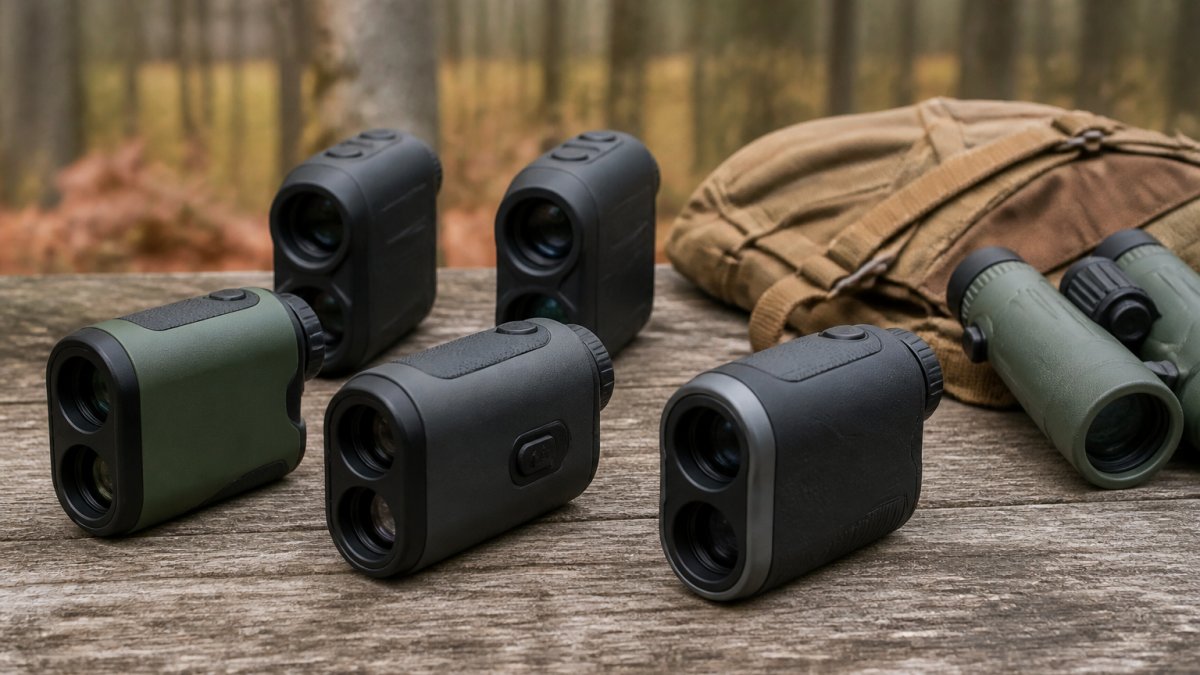
A rangefinder is a ranging device that measures the distance to a target using a laser pulse and returns the reading in yards. The best budget friendly hunting rangefinders now do the one job that matters, which is giving you a fast, repeatable distance before you draw or shoulder the rifle.
The gap between entry-level and premium units has narrowed. What you give up at the low end is mostly glass quality and extreme range, not core accuracy. For most whitetail, hog, and predator setups inside 400 yards, a budget unit reads fast enough to keep you inside an ethical shot window.
Below, we break down what actually separates a good cheap rangefinder from a bad one, plus our picks by price tier.
Quick Comparison: Best Budget Friendly Hunting Rangefinders
Here is how the three price tiers stack up on the specs that decide a purchase.
| Tier | Typical Max Range | Angle Compensation | Best For | What You Give Up |
|---|---|---|---|---|
| Under $200 | 400-600 yards | Basic or none | Tree-stand deer hunters | Dim glass, slower read |
| Under $300 | 700-1,000 yards | Yes, incl. ballistic | Mixed rifle and bow | Range beyond 800 yards |
| Bowhunting pick | 300-500 yards | Yes, archery mode | Bowhunters | Rifle-distance ranging |
Pricing varies by model, retailer, and season, so check the current price on our optics page before you commit. What matters is matching the tier to your actual hunting distance.
The Best Hunting Rangefinder Under $200
The best hunting rangefinder under $200 is one that reads 400 yards cleanly and fits in a chest pocket. At this price, you are buying a tool, not a toy, and the difference shows up in the glass and the button feel.
Two things separate a keeper from a return:
- A scan mode, so you can sweep across brush and get a live reading instead of a single beep.
- Water resistance, because a fogged lens on a cold morning ends your hunt.
A common mistake is chasing a huge advertised max range at this price. A unit that claims 800 yards but struggles past 300 in low light is worse than an honest 400-yard model. Ignore the box number and prioritize clear glass and a fast read.
The Best Rangefinder Under $300 for Hunting
The best rangefinder under $300 for hunting adds angle compensation, better coatings, and often a ballistic readout. This is the tier we recommend for hunters who want one unit for both rifle and bow seasons.
What you gain over the sub-$200 class:
- Angle compensation built in, so uphill and downhill shots read the true horizontal distance.
- Sharper glass that holds up in the first and last 30 minutes of legal light.
- Faster processor, which means less waiting for the number to settle.
The one drawback: at this price, a unit may not range past about 800 yards on game. If you hunt open country and regularly shoot long, budget optics will frustrate you. For timber and field-edge hunting, this tier is where we would spend our money.
Choosing a Budget Rangefinder for Bowhunting
A budget rangefinder for bowhunting needs an archery mode and a tight beam, because bow shots are close and the target is small. You are ranging a deer's vitals at 25 yards, not a hillside at 600.
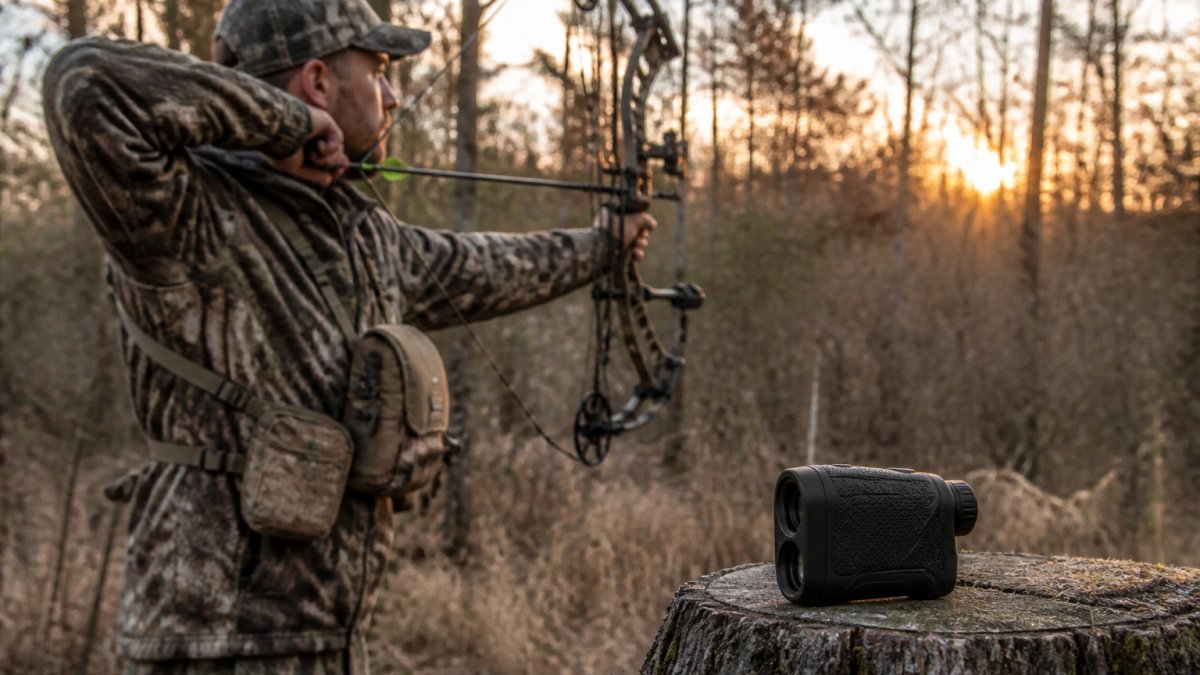
Look for these bow-specific traits:
- Archery mode that ignores brush between you and the animal.
- Angle compensation, since tree-stand shots are almost always angled.
- A clear, simple display you can read in dim timber light.
What most guides miss is that a bowhunter rarely needs max range. A unit that reads 40 yards instantly and accurately beats one that reaches 1,000 yards slowly. Prioritize speed and a bright display over distance.
Hunting Rangefinder Angle Compensation Explained
Hunting rangefinder angle compensation is a feature that adjusts your reading for the slope of the shot, giving you the true horizontal distance the arrow or bullet will travel. Gravity only acts on the horizontal component, so a steep shot travels a shorter effective distance than the line-of-sight reading suggests.
Why it matters in practice:
- Shooting steeply uphill or downhill at a deer, the line-of-sight number overstates the distance.
- Without compensation, you aim high when you should not, and the shot sails over the back.
- Most modern units handle this automatically once you enable the mode.
If you hunt flat ground exclusively, you can skip it. If you hunt from a stand, a ridge, or broken terrain, angle compensation is the single feature we would not cut.
Features That Matter (and What to Ignore)
The features that matter on a budget hunting rangefinder are scan mode, angle compensation, water resistance, and a readable display. Everything else is marketing until you are hunting at the edges of your ability.
Worth paying for:
- Angle compensation and archery mode
- Scan or continuous mode
- Water resistance and a rubberized body
- Bright, high-contrast display
Safe to ignore at this price:
- Extreme max-range claims
- Bluetooth app pairing
- Built-in ballistics you will never program
- Camo patterns that add cost but not function
Conclusion
The hardest part of buying a budget rangefinder is not finding one. It is resisting the spec sheet and matching the unit to how you actually hunt. Decide your real maximum distance first, then buy the tier that covers it with room to spare.
2AG Outdoors stocks optics, hunting gear, and accessories for every season, so you can compare rangefinders alongside the rifles and bows they pair with. Browse our optics selection to check current pricing, and reach out to our team if you want help matching a unit to your terrain and game.
Frequently Asked Questions
How much should I spend on a hunting rangefinder?
Most hunters get solid performance from a rangefinder. Units with basic angle compensation can provide reliable ranging out to 400-600 yards, covering most rifle and bow setups. Higher-tier options often add faster processors, brighter optics, and longer maximum range. The ideal spend depends on your specific hunting needs and distances.
Are cheap rangefinders accurate enough for hunting?
Yes, within their rated range. Budget units typically hold accuracy of plus or minus one yard on reflective targets, which is more than enough for ethical shot placement. The catch is maximum range on game animals: a model rated to 800 yards on reflective targets may only range a deer to 400 or 500 yards. Check the deer or game ranging spec, not the reflective number, and keep shots inside the distance the unit handles consistently.
Do I need angle compensation in a hunting rangefinder?
If you hunt from a treestand, saddle, or steep terrain, yes. Angle compensation calculates the true horizontal distance to your target rather than the line-of-sight distance, which prevents high shots on steep angles. Bowhunters benefit most because arrow drop is exaggerated over short distances. Flat-ground rifle hunters can skip it, but since most budget models include it as standard, there is little reason to buy without it.
Which budget rangefinder works best for bowhunting?
Look for a compact unit with angle compensation, fast target acquisition, and clear readings inside 100 yards, since bow shots are close. A display that stays readable in low light matters more than maximum range. Units from established optics brands usually deliver this combination. Confirm the model has a bow mode or angle-compensated distance readout, and practice ranging targets from your stand before the season opens.
The right rangefinder should feel boring on the hunt: fast, quiet, and accurate every time you press the button. Start with your true hunting distance, pick the tier that fits, and let 2AG Outdoors help you gear up for the season ahead.