 blog
Best Hunting Rifle Under $1,000: Tested Options
Table of Contents
- What Makes a Hunting Rifle Worth the Money
- Best Deer Rifles Under $1,000: Top Picks by Purpose
- Hunting Rifle Calibers for Deer: Which One Fits Your Region
- How to Choose a Hunting Rifle: Key Specs and Field Handling
- Hunting Rifle with Scope Under $1,000: Total Budget Breakdown
- Long-Range Capability and Field-Ready Accuracy
- Common Mistakes When Buying a Budget Hunting Rifle
- Frequently Asked Questions
Last Updated: October 21, 2026
What Makes a Hunting Rifle Worth the Money
A hunting rifle under $1,000 means balancing accuracy, reliability, and field performance without paying for features you won't use.
A solid budget rifle is separated from one that disappoints by its bolt-action reliability, trigger quality, and field handling.
A hunting rifle under 1000 needs to group consistently at 100 yards, handle common calibers without punishing recoil, and hold zero after transport.
The real cost isn't just the sticker price. You'll need a scope, rings, ammunition, and possibly a sling or bipod.
Best Deer Rifles Under $1,000: Top Picks by Purpose
Bolt-Action Rifles: The Standard Choice
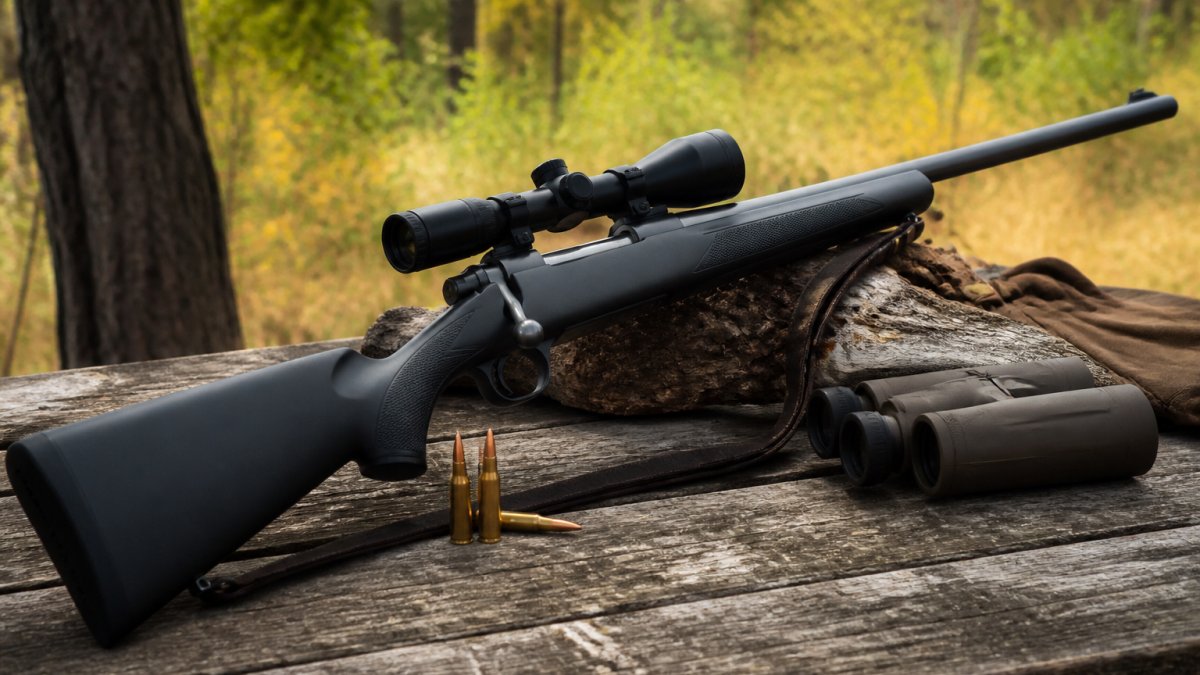
Bolt-action rifles dominate budget hunting because they're simple, reliable, and accurate: fewer parts to fail and consistent lock-up.
Most quality rifles here use a push-feed bolt with a two-position safety and hold zero through multiple seasons. Standard configurations: 22-inch barrels, synthetic or wood stocks, and Picatinny rails.
The advantage over semi-automatics at this price is mechanical consistency: a bolt-action needs no tuning across different ammunition and conditions, while sub-$1,000 semi-autos often do.
Accuracy and Group Size Performance
Out-of-the-box accuracy matters more than theoretical potential. A hunting rifle under 1000 that shoots 1.5-inch groups at 100 yards is ready to hunt. Anything tighter is a bonus.
For deer hunting, sub-inch groups are overkill. Ethical shots rarely exceed 300 yards and most hunters shoot under 200; a 1.5-inch rifle puts rounds where they need to go.
Budget rifles often ship with button-rifled barrels rather than match-grade, but that rarely impacts field accuracy.
At this price point the scope matters more than the rifle: a $200 rifle with a $400 scope beats a $600 rifle with a $100 scope.
Hunting Rifle Calibers for Deer: Which One Fits Your Region
Caliber selection most affects whether a hunting rifle under 1000 dollars works for your hunt. The right chambering depends on your game, your shooting distance, and how much recoil you manage accurately, and state regulations can eliminate options before you reach the store.
Match the Caliber to the Game
.243 Winchester is the lightest-recoiling common deer cartridge and a favorite for new and recoil-sensitive shooters.
.270 Winchester offers a slightly flatter trajectory than .308 with similar power, making it excellent for open terrain. Ammunition often costs less than .308 and recoil is slightly lighter.
6.5 Creedmoor has become popular for hunting rifles under $1,000: it shoots flatter than .308, generates less recoil, and maintains energy at distance, with ammunition costs dropping as production increased.
.260 Remington is underrated: 6.5 Creedmoor-level performance in a more compact package, though ammunition availability varies by region. Check local stock before committing.
7mm-08 Remington splits the difference between .308 and 6.5 Creedmoor: mild recoil, good bullet selection, and enough energy for deer and black bear at woods distances.
Map the Caliber to Your Region and Distance
In heavy forest where shots rarely exceed 150 yards, .308 or .270 are more than enough, and .243 or 7mm-08 work fine with less recoil. In open country, flatter calibers like 6.5 Creedmoor and .270 reduce the guesswork on drop and wind.
A practical rule: if your longest realistic shot is under 200 yards, pick the caliber you shoot most accurately and can buy locally. If your terrain regularly offers 250- to 300-yard shots, favor 6.5 Creedmoor, .270 Winchester, or a fast-twist .308 load with a high ballistic-coefficient bullet.
Check Your State's Regulations Before You Buy
Caliber legality varies by state and sometimes by game unit. Several states set a minimum bullet diameter or cartridge length for big game, ruling out .243 or certain lighter loads; others restrict magazine capacity or specific cartridges. Check your state wildlife agency's current regulations before committing, a caliber legal last season may not be this season.
The best hunting rifle caliber for deer is the one you can shoot accurately, that your state allows for your game, and that ammunition is available in your area. Consistency beats ballistics.
How to Choose a Hunting Rifle: Key Specs and Field Handling
Stock Design and Carry Weight
The stock is where many budget rifles disappoint: a poor fit forces an awkward shooting position, hurting accuracy and comfort during long waits.
Synthetic stocks are standard on hunting rifles under $1,000: durable, weather-resistant, and lighter than wood. What matters is fit, comb-to-cheek alignment, length of pull, and a natural grip angle.
Carry weight impacts field performance: a rifle over 9 pounds gets tiring over a full day.
Test the balance. A muzzle-heavy rifle feels awkward to carry and slower to mount when a deer appears; a balanced rifle comes up naturally and feels lighter than it is.
Trigger Quality and Adjustability
The trigger is where budget rifles often cut corners: a heavy, creepy trigger makes consistent shooting difficult, while a clean break reduces anticipation and flinch.
Factory triggers on budget hunting rifles typically break at 3.5 to 4.5 pounds, heavier than match triggers but acceptable for hunting. What matters is consistency: the break should feel the same every time.
Adjustable triggers are increasingly common on hunting rifles under $1,000. Set one to 3 pounds for hunting and you'll have a crisp, predictable break.
Some budget rifles ship with two-stage triggers, whose takeup gives useful feedback that you're close to firing.
Hunting Rifle with Scope Under $1,000: Total Budget Breakdown
A hunting rifle with scope under $1,000 requires smart allocation. If your total budget is $1,000, you're splitting it between rifle and optics; at $1,200 to $1,400 you have more flexibility.
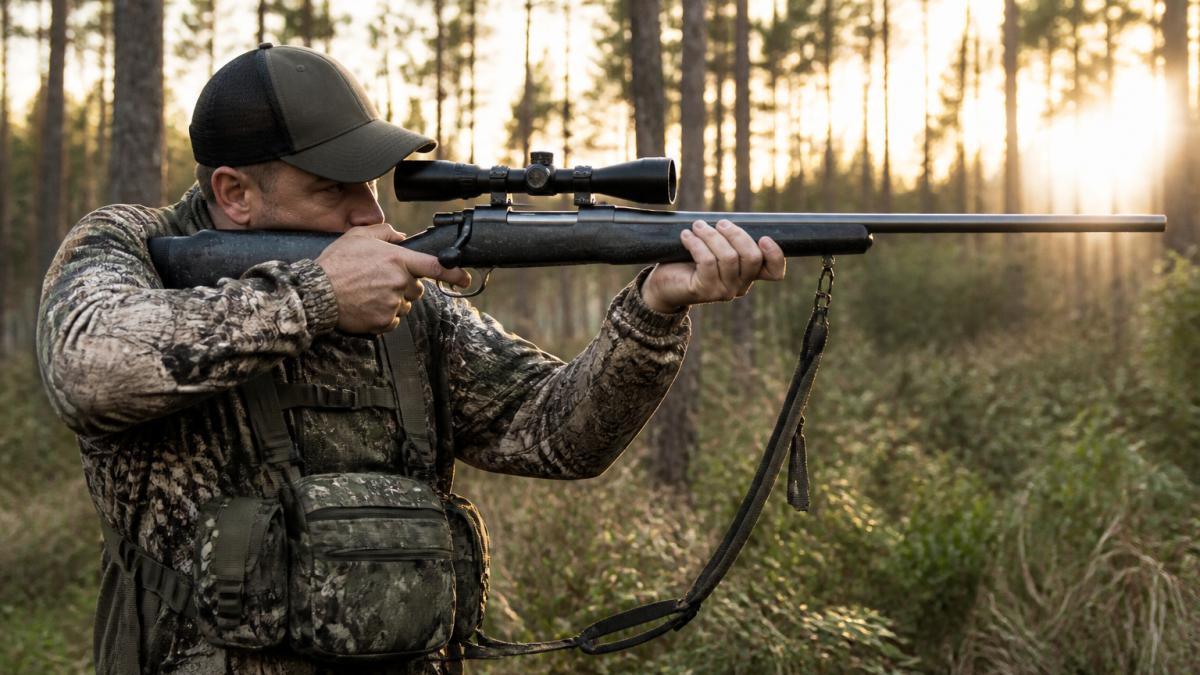
Budget allocation for a $1,000 total:
- Rifle: $600-$700
- Scope: $250-$300
- Rings and base: $50-$75
- Ammunition (break-in and practice): $50-$75
Budget allocation for a $1,400 total:
- Rifle: $800-$900
- Scope: $350-$450
- Rings and base: $75-$100
- Ammunition: $100-$150
- Sling or bipod: $50-$75
The scope matters more than the rifle.
Look for scopes with quality glass, 3-9x magnification (versatile for hunting), and one-inch tubes (standard and affordable). Avoid complicated long-range reticles; a simple crosshair or duplex reticle is all you need for hunting.
Rings and bases should match your rifle's rail system. Most modern hunting rifles use Picatinny rails, which accept standard rings. Quality rings cost $50-$75 and ensure your scope stays put.
Long-Range Capability and Field-Ready Accuracy
A hunting rifle under 1000 dollars can shoot accurately to 300 yards with the right ammunition and setup. Beyond 300 yards, you're pushing into match-rifle territory. But "long-range capability" is only meaningful if you can verify it with a repeatable method and then carry the rifle in real field conditions.
A Transparent Testing Method You Can Repeat
Most accuracy claims you read online are unrepeatable because they omit the method. Here is a simple, honest protocol any hunter can run with a budget rifle and a few boxes of ammunition:
- Distance: Shoot at 100 yards for baseline groups, then confirm at 200 and 300 yards if your range allows.
- Ammunition: Test at least two loads, a common factory hunting load and one alternative bullet weight, because budget rifles often show a clear preference.
- Sample size: Fire three five-shot groups per load, not one three-shot group. A single group is noise; three groups reveal a pattern.
- Measurement: Measure center-to-center of the widest two holes in each group, then average the three groups. Report the average, not the best group.
- Conditions: Note wind and temperature. A calm morning group is not comparable to a windy afternoon group.
A rifle that averages 1.5 inches at 100 yards across three five-shot groups with a hunting load is field-ready. A rifle that shoots one 0.9-inch group and two 2.5-inch groups is not a sub-MOA rifle, it is an inconsistent one, and inconsistency is what costs you a clean kill.
Field Handling Matters More Than Bench Numbers
A rifle that shoots tiny groups from a bench but handles poorly in the field is the wrong hunting rifle.
Most quality hunting rifles under $1,000 weigh 7.5 to 8.5 pounds without optics; with scope and rings you're around 9 to 10 pounds. That's manageable for a day hunt but tiring on multi-day backcountry trips.
Test the rifle's balance by carrying it in the field before season.
Recoil tolerance is part of field accuracy. A caliber you flinch from is a caliber you cannot shoot well under pressure.
Long-Term Ownership Costs and Support
Purchase price is only the entry cost. Before you commit to a hunting rifle under 1000 dollars, factor in what it costs to keep shooting it for a decade:
- Ammunition: Common chamberings like .308 Winchester and .270 Winchester are widely stocked and reasonably priced. Less common cartridges can cost more per box and may be hard to find during shortages.
- Replacement parts: Budget rifles from established manufacturers generally have available magazines, firing-pin assemblies, and stock components. Verify parts support before buying an off-brand rifle.
- Warranty: Most major manufacturers offer limited lifetime warranties on the rifle. Read what is covered, stocks, barrels, and finishes often have different terms.
- Maintenance: A bolt-action rifle needs little beyond bore cleaning, light lubrication, and occasional torque checks on action screws. Budget for cleaning supplies and a torque wrench, not gunsmithing.
Safety and Legal Compliance
Long-range capability comes with responsibility. Confirm your state's hunting regulations on legal shooting distances, caliber minimums, and magazine capacity before you hunt. Store the rifle securely when not in use, and follow the basic rules of firearm safety every time you handle it. A rifle you shoot well and handle safely is worth more than any specification sheet.
Common Mistakes When Buying a Budget Hunting Rifle
Prioritizing price over fit. The cheapest rifle isn't the best value if it doesn't fit your body.
Skimping on optics. A $500 rifle with a $150 scope will disappoint.
Ignoring ammunition availability. A hunting rifle chambered in an uncommon caliber might save $100 upfront but cost you hundreds more in ammunition searches.
Not testing before hunting season. A rifle that hasn't been shot since you bought it is a liability in the field.
Buying without handling. If possible, hold the rifle before purchasing. How it feels in your hands matters more than specs on a sheet.
Frequently Asked Questions
What is the best hunting rifle for the money under $1,000?
The best hunting rifle under $1,000 depends on your intended game and shooting distance. Bolt-action rifles dominate this price range because they deliver reliable accuracy and durability without premium costs. Look for models with adjustable triggers, quality barrels capable of sub-inch groups at 100 yards, and proven field performance. Pair your rifle choice with your intended caliber and region's game regulations to maximize value.
Does a $1,000 hunting rifle budget include the scope?
No. A $1,000 budget typically covers the rifle itself. Quality optics suitable for hunting add $200 to $500 or more to your total investment. When calculating your complete setup cost, budget separately for a scope, mounting rings, ammunition, and potentially a sling or shooting rest. This separation helps you allocate funds strategically across all components needed for field-ready accuracy.
What caliber should I choose for a budget hunting rifle?
Caliber selection depends on your target game and region. .308 Winchester and 6.5 Creedmoor are versatile choices for deer and medium game across most terrain. .260 Remington offers excellent accuracy per dollar for precision shooting. Check your state's hunting regulations for caliber requirements by game species. Budget rifles in these common calibers also mean lower ammunition costs and wider availability, making them practical long-term choices.
Are bolt-action rifles better than other hunting rifles?
Bolt-action rifles dominate the budget hunting market because they offer superior accuracy, reliability, and durability at lower cost than semi-automatic or other action types. Their simple mechanical design means fewer failure points, easier maintenance, and consistent performance in field conditions. For hunting applications where a single accurate shot matters more than rapid fire, bolt-action rifles deliver the best value under $1,000.